Why adults get circumcised: reasons and alternatives
 Medically reviewed by Dr Danish Gul, MBBS, Chief Resident in Urology and Kidney Transplant, PAF Hospital, IslamabadReviewed Nov 4, 2026
Short answer
Adult circumcision is most often done for a tight foreskin that won't pull back over the head of the penis (phimosis).1 Other medical reasons include repeated infection or inflammation, painful tearing during sex, and scarring from a skin condition called lichen sclerosus.1–4 Some men choose it for personal, cultural or religious reasons.1, 2, 5 For some problems, other treatments can be tried first.3, 4
If you're weighing circumcision as an adult, below are the reasons men have it, the other options, and the signs that need urgent help.
For babies and boys, see Circumcision in babies and children. All adult pages: Circumcision in adults.
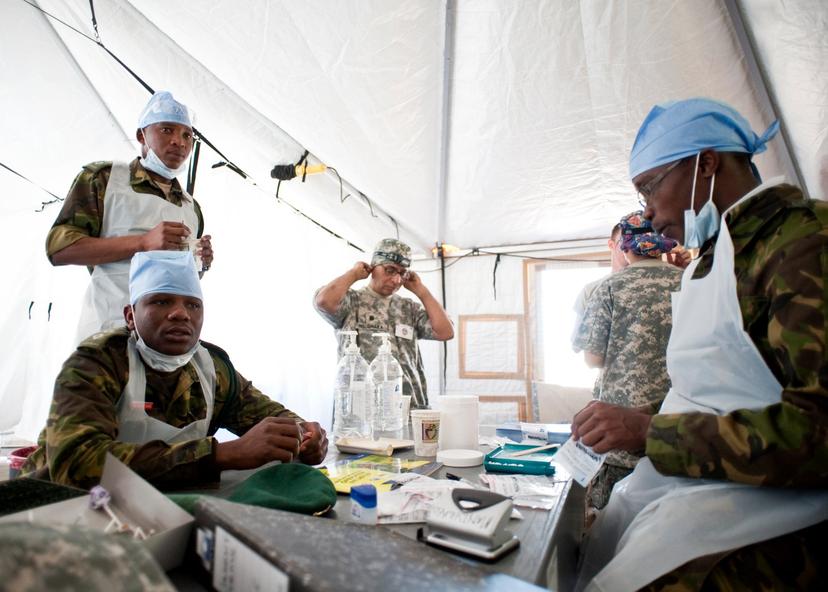
Photo: US Army Africa / Wikimedia Commons · CC BY 2.0
Key takeaways
- A tight foreskin that causes no problems may need no treatment, but doctors advise treating lichen sclerosus even when it doesn't hurt or itch.6, 16
- Steroid cream can soften a tight foreskin, but the tightness often comes back once the cream is stopped.3, 4
- Lengthening a short frenulum (frenuloplasty) is a smaller operation that helps when the frenulum, not the foreskin, is the problem.3, 4
- Personal reasons include how it looks, hygiene, fitting in with family, community or partners, and religion.2, 7–9
- A foreskin stuck behind the head of the penis that swells and won't come forward again (paraphimosis) is an emergency.1, 3, 4, 6
At a glance
- What it is
- Surgery to remove the foreskin, which covers the head of the penis
- Who it's for
- Men with foreskin problems, or with personal or religious reasons
- Who performs it
- Circumcision specialists, family doctors, general surgeons, mohels, urologists
- Pain relief
- Usually a numbing injection; you're awake and home the same day
- Healing time
- About 4 to 6 weeks to heal fully
- Emergency sign
- Foreskin stuck behind the head, swollen, won't come forward (paraphimosis)
On this page
- What medical problems lead men to get circumcised as adults?
- Is circumcision ever medically necessary for adults?
- Can a tight foreskin be treated without circumcision?
- What happens if a tight foreskin isn't treated?
- Why do some men choose circumcision for personal reasons?
- Do men who convert to Judaism or Islam need to be circumcised?
- Does circumcision protect against HIV?
- Who does adult circumcision?
- What happens during and after adult circumcision?
What medical problems lead men to get circumcised as adults?
The most common medical reason for adult circumcision is a tight foreskin that won't pull back (phimosis).1 Each medical reason, in brief:
- Tight foreskin (phimosis): a foreskin that won't pull back over the head of the penis.1 See Phimosis (tight foreskin) in adults.
- Foreskin stuck behind the head (paraphimosis): a foreskin that has been pulled back and won't come forward again.1
- Repeated inflammation or infection: of the head of the penis (balanitis) or of the foreskin (posthitis).1, 2
- Frequent urinary infections: urinary tract infections that keep coming back.2
- Painful tearing during sex: including a short or torn frenulum, the band of skin under the head of the penis.1, 2 See Torn or short frenulum (frenulum breve) in adults.
- Scarring from lichen sclerosus: a skin condition that is often the cause of a tight foreskin in adults.3, 4
- Growths on the foreskin: a doctor should check any growth first; it may need a biopsy (a small tissue sample).1, 3–5
What is usually tried first for each reason?
What's usually tried first depends on the reason. For scarring from lichen sclerosus, circumcision is the main treatment; for the other reasons, something else usually comes first.
Adult men: what is usually tried first for each medical reason
| Reason | What's usually tried first |
|---|---|
| Tight foreskin (phimosis) | Steroid cream.3, 4 |
| Foreskin stuck behind the head (paraphimosis) | An emergency. A doctor may be able to bring the foreskin forward again. Circumcision is sometimes suggested afterward.6 |
| Repeated balanitis or posthitis | Washing every day with only water or an emollient (a moisturizing wash), and a cream or medicine for the cause (a mild steroid, an antifungal or an antibiotic). If it keeps coming back, a doctor will usually check for diabetes. Circumcision may be considered if it keeps coming back.10 |
| Frequent urinary infections | Antibiotics for each infection. If they keep coming back, a doctor may send you for tests to find the cause.11 |
| Short or torn frenulum | Watch and wait if symptoms are mild; lengthening the frenulum (frenuloplasty) if it keeps hurting or tearing.3, 4, 18 |
| Scarring from lichen sclerosus | Circumcision is the main treatment, although a doctor may still try a strong steroid cream first.4, 13 |
| Growths on the foreskin | A doctor checks first; it may need a biopsy.1, 3–5 |
Is circumcision ever medically necessary for adults?
Sometimes. When lichen sclerosus has scarred the foreskin, circumcision is the main treatment.4 It's also usually needed for a tight foreskin when creams haven't worked.3 For most other problems, other treatments are tried first.12
Can a tight foreskin be treated without circumcision?
Sometimes. It depends on the cause and on how much scarring there is. Options are listed from least to most invasive.
Adult men with a tight foreskin: options from least to most invasive
| Option | What it involves | Things to know |
|---|---|---|
| Watch and wait | No treatment while the foreskin causes no problems | If a tight foreskin causes no problems, you may not need any treatment, but doctors advise treating lichen sclerosus even when it doesn't hurt or itch.6, 16 |
| Steroid cream | A cream or ointment put on the foreskin | Can soften a tight foreskin and ease symptoms for a while, but the tightness often comes back when the cream is stopped.3, 4 |
| Smaller operation | Widening the foreskin (preputioplasty), or lengthening a short frenulum (frenuloplasty) | Preputioplasty has a limited role in adults. Frenuloplasty helps when the frenulum, not the foreskin, is the problem.3, 4 |
| Circumcision | Removing the foreskin | The main treatment once lichen sclerosus has scarred the foreskin, although a doctor may still try a strong steroid cream first; and the lasting fix when other treatments don't work.3, 4, 13 |
Watch and wait
Steroid cream
Smaller operation
Circumcision
Don't try to stretch a diseased foreskin.4 Ask your provider which options fit your situation, and what happens if you wait. More detail on creams and treatment is on Phimosis (tight foreskin) in adults.
What happens if a tight foreskin isn't treated?
An untreated tight foreskin can lead to repeated infections and inflammation, pain or bleeding when urinating, and a foreskin that gets stuck behind the head.13 It can also cause painful erections that make sex difficult.6
In practice, many men find that a tight foreskin affects their sex life and confidence.19
When to call
Call 911 now
Call your provider today
- After circumcision: the signs are listed on Healing after adult circumcision.
- With a tight foreskin: the signs are listed on Phimosis (tight foreskin) in adults.
Normal: keep watching
- After circumcision: what's normal week by week is on Healing after adult circumcision.
Why do some men choose circumcision for personal reasons?
Some men choose adult circumcision for how it looks, for hygiene, or to fit in.2, 7
- How it looks: some men simply prefer the look.2, 7
- Hygiene: some find it easier to keep clean.7
- Fitting in: with family, community or partners.7
- Religion: see the next question.
In practice, some men choose it because of a partner's preference. In practice, others want to prevent problems they have seen in other men, such as a tight foreskin or infections.19
How it's done, and the style choices, are on Types of adult circumcision: methods and styles.
Do men who convert to Judaism or Islam need to be circumcised?
Jewish law requires circumcision for men who convert to Judaism; a man who is already circumcised has a drop of blood taken instead (hatafat dam brit). Reform Judaism accepts converts without these rites.8, 14 In Islam, circumcision (khitan) is widely practiced, but the schools of Islamic law differ on whether it is required or recommended.9 For men who convert, Egypt's Dar al-Ifta calls it recommended (sunnah), and it is delayed while it could cause harm.15 If you're converting, the rabbi or imam guiding you can explain what your community expects.
Does circumcision protect against HIV?
In trials in Africa, circumcision lowered men's risk of getting HIV, and some other sexually transmitted infections, from vaginal sex, but did not remove it. It hasn't been shown to lower the risk for the receptive partner in anal sex. Condoms, fewer partners and PrEP (HIV prevention medicine) still matter, whether you're circumcised or not.7
More on the benefits and risks: Adult circumcision benefits and risks.
Who does adult circumcision?
Adult circumcisions are done by circumcision specialists, family doctors, general surgeons, mohels and urologists.1, 8, 17 On Circumpedia, a circumcision specialist means a provider whose main professional focus is circumcision, with dedicated training, extensive hands-on experience and routine performance of the procedure. Their skills cover first circumcisions, revisions and repairs, with attention to precision, function and the final cosmetic appearance. They assess patients, manage pain, oversee healing and follow-up, and recognize and manage complications. This is a practice focus, not a formal medical specialty. Not everyone in each group offers it, so ask any provider how many adult circumcisions they do.
Who does adult circumcision? compares their training, settings and pain relief side by side.
What happens during and after adult circumcision?
Adult circumcision removes the foreskin, the skin that covers the head of the penis.1, 2, 5 It is usually done as an outpatient: you're awake, the area is numbed with an injection, and you go home the same day.1, 2, 5 Swelling and bruising fade over 1 to 2 weeks,2 and full healing takes about 4 to 6 weeks.3, 12
For the numbing and pain afterward, see Does adult circumcision hurt?. For recovery week by week, see Healing after adult circumcision.
Questions to ask your provider
- Is circumcision the only fix for my problem?
- What happens if I wait, or try cream first?
- Would a smaller operation, such as frenuloplasty, work for me?
- Is my foreskin scarred, and could it be lichen sclerosus?
- What would recovery look like for me?
- If my reason is personal, not medical, does anything change in how you do it or what my insurance covers?
The bottom line
Men have circumcision as adults for medical, personal and religious reasons. For a tight foreskin, creams and smaller operations can help some men, but problems often come back. Circumcision is the lasting fix when other treatments don't work. The choice is yours, made with a provider who explains every option.
Sources (19)
- Holman JR, Stuessi KA. "Adult Circumcision." American Family Physician (American Academy of Family Physicians), Mar 15, 1999;59(6):1514-1518. https://www.aafp.org/pubs/afp/issues/1999/0315/p1514.html (accessed Oct 26, 2026)
- Society of Urologic Nurses and Associates (SUNA). "Circumcision" patient handout. 2022. https://www.suna.org/sites/default/files/download/resources/SUNA_circumcision.pdf (accessed Oct 22, 2026)
- British Association of Urological Surgeons (BAUS). "Complete removal of the foreskin (circumcision)," patient leaflet A24/077. June 2024 (review due Sep 2026). https://www.baus.org.uk/_userfiles/pages/files/Patients/Leaflets/Circumcision.pdf (accessed Oct 26, 2026)
- British Association of Urological Surgeons (BAUS). "Tight foreskin (phimosis)." March 2024 (review due Aug 2026). https://www.baus.org.uk/patients/conditions/13/tight_foreskin_phimosis/ (accessed Oct 26, 2026)
- University of Utah Health. "Circumcision as an adult, circumcised vs uncircumcised, phimosis and paraphimosis treatment." Published Apr 6, 2021, updated Sep 15, 2026. https://healthcare.utah.edu/mens-health/treatments/circumcision-frenulotomy (accessed Oct 26, 2026)
- NHS (England). "Tight foreskin (phimosis)." Reviewed Mar 6, 2026. https://www.nhs.uk/conditions/phimosis/ (accessed Oct 26, 2026)
- US Centers for Disease Control and Prevention (CDC). "Information for Providers to Share with Male Patients and Parents Regarding Male Circumcision and the Prevention of HIV Infection, Sexually Transmitted Infections, and other Health Outcomes." Aug 22, 2018. https://stacks.cdc.gov/view/cdc/58456 (accessed Oct 26, 2026)
- My Jewish Learning. "The Covenant of Circumcision" (A. Diamant). Modified May 13, 2022. https://www.myjewishlearning.com/article/the-covenant-of-circumcision/ (accessed Oct 22, 2026)
- Encyclopaedia Britannica. "khitān" (Britannica Editors). Undated. https://www.britannica.com/topic/khitan-Islam (accessed Oct 26, 2026)
- NHS (England). "Balanitis." Reviewed May 30, 2023. https://www.nhs.uk/conditions/balanitis/ (accessed Oct 26, 2026)
- NHS (England). "Urinary tract infections (UTIs)." Reviewed Jul 11, 2025. https://www.nhs.uk/conditions/urinary-tract-infections-utis/ (accessed Oct 26, 2026)
- NHS (England). "Circumcision in men." Reviewed Mar 11, 2026. https://www.nhs.uk/conditions/circumcision-in-men/ (also served at https://www.nhs.uk/tests-and-treatments/circumcision/) (accessed Oct 26, 2026)
- McPhee AS, Stormont G, McKay AC. "Phimosis." StatPearls (NCBI Bookshelf, US National Library of Medicine). Updated Aug 8, 2023. https://www.ncbi.nlm.nih.gov/books/NBK525972/ (accessed Oct 26, 2026)
- ReformJudaism.org. "Is it the policy that men must be circumcised prior to conversion?" (Rabbi Mark Washofsky, PhD). Undated. https://reformjudaism.org/learning/answers-jewish-questions/it-policy-men-must-be-circumcised-prior-conversion-my-8-year-old (accessed Oct 26, 2026)
- Dar al-Ifta al-Misriyyah (Egypt). Fatwa 5940, "Is it obligatory for adult male converts to be circumcised when they embrace Islam?" Jul 24, 2013. https://dar-alifta.org/en/fatwa/details/5940/is-it-obligatory-for-adult-male-converts-to-be-circumcised-when-they-embrace-isla (accessed Oct 26, 2026)
- National Institute of Arthritis and Musculoskeletal and Skin Diseases (NIAMS, NIH). "Lichen sclerosus." Undated. https://www.niams.nih.gov/health-topics/lichen-sclerosus (accessed Oct 22, 2026)
- Warees MW, Anand S, Leslie SW, Rodriguez AM. "Circumcision." StatPearls (NCBI Bookshelf). Updated May 2, 2024. https://www.ncbi.nlm.nih.gov/books/NBK535436/ (accessed Oct 26, 2026)
- Dr Mazen Abu Alnasr, MD, General Surgeon (Saudi Board of General Surgery). Reviewer statement for Circumpedia (second doctor's check), Oct 29, 2026.
- Practical experience of a circumcision specialist
See something wrong? Report an error · How we correct pages · How we make our pages