What is circumcision? Meaning, reasons and methods
 Medically reviewed by Dr Mazen Abu Alnasr, MD, General Surgeon (Saudi Board of General Surgery)Reviewed Nov 4, 2026
Short answer
Circumcision is the removal of the foreskin, the skin that covers the head of the penis.1 It is done on newborns, older boys and men, for medical, religious, cultural or personal reasons.1–4 How it's done, the pain relief and the healing differ between babies and adults.9, 10 Newborns are most often circumcised with a clamp or a plastic ring, and adults usually with a surgical cut and stitches.9–11
If you're new to circumcision, below is what's removed, why people choose it, how it's done, and which pages to read for your age.
For babies and boys up to 17, start at Circumcision in babies and children. For men 18 and over, start at Circumcision in adults.
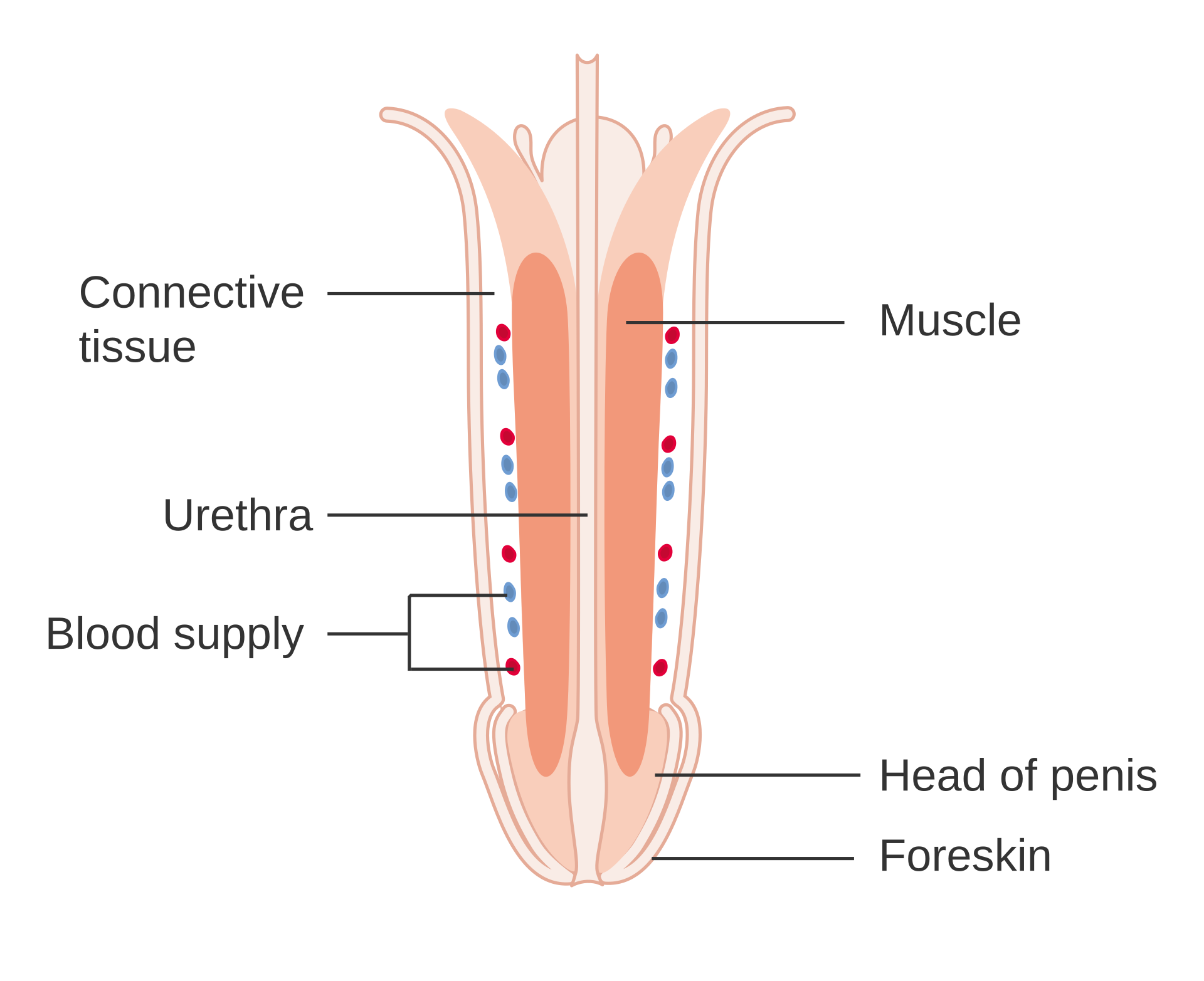
Drawing: Cancer Research UK / Wikimedia Commons · CC BY-SA 4.0
Key takeaways
- Phimosis, a tight foreskin that won't pull back, is the most common medical reason adults have circumcision.3
- Newborn circumcision is the parents' decision, weighing religious, cultural and personal reasons with the medical benefits and risks.1
- Jewish families hold a bris on a baby's eighth day, unless the baby's health means waiting.6
- In Islam, circumcision is widely practiced; the schools of Islamic law differ on whether it is required or recommended, including for men who convert.8, 14
- The three most common newborn methods are the Gomco clamp, Mogen clamp and Plastibell, while adults usually have a surgical cut with stitches.9–11
At a glance
- What it is
- Removal of the foreskin, the skin covering the head of the penis
- Main reasons
- Medical, religious, cultural and personal; for newborns, the parents decide
- Who performs it
- By age: circumcision specialists, doctors (several kinds), mohels, nurse practitioners and nurse-midwives
- Main methods
- Newborns: Gomco, Mogen or Plastibell; adults: a surgical cut with stitches
- Healing
- Differs by age; see the babies and adult pages
- Start here
- Circumcision in babies and children, or Circumcision in adults
On this page
- What's the difference between circumcised and uncircumcised?
- Why do people get circumcised?
- How is circumcision done?
- When is circumcision done?
- Who does circumcision?
- How do pain relief and healing differ for babies and adults?
- What are the possible benefits and risks of circumcision?
- Where should you start?
What's the difference between circumcised and uncircumcised?
Circumcised means the foreskin has been removed; uncircumcised means it is still there. The foreskin is the skin that covers the head of the penis, and circumcision is its removal.1
Read more: Circumcised vs uncircumcised penis: looks, care, health
Why do people get circumcised?
People choose circumcision for medical, religious, cultural and personal reasons, and the reasons differ by age.1, 3–5
- For a newborn: the decision is the parents', weighing religious, cultural and personal reasons with the medical benefits and risks.1
- Medical reasons in adults: most often a tight foreskin that won't pull back (phimosis). Others include a foreskin stuck behind the head of the penis (paraphimosis), repeated inflammation or infection, and painful tearing during sex.3, 4
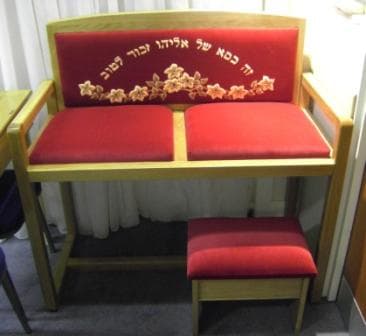
- Religion: Jewish families hold a bris (brit milah) on the eighth day, unless the baby's health means waiting.6 Jewish law requires circumcision for men who convert to Judaism, though Reform Judaism accepts converts without it.7, 15 In Islam, circumcision (khitan) is widely practiced, but the schools of Islamic law differ on whether it is required or recommended.8 For men who convert, Egypt's Dar al-Ifta calls it recommended (sunnah), and it is delayed while it could cause harm.14
- Personal and cultural reasons: some men prefer the look, some find it easier to keep clean, and some want to fit in with family, community or partners.4, 5
Read more: Why adults get circumcised · Phimosis (tight foreskin) in adults · Newborn circumcision

How is circumcision done?
Circumcision is done differently for babies and for adults.9, 10 Methods are listed in alphabetical order.
- Newborns: the three most common methods are the Gomco clamp, the Mogen clamp and the Plastibell ring.9
- Adults: the foreskin is usually removed with a scalpel or scissors, and the edges are stitched.10, 11 A WHO manual describes three surgical methods: dorsal slit, forceps-guided and sleeve resection.10 Devices such as the ShangRing are used mainly in HIV-prevention programs in Africa.12
In practice, Orthodox mohels use the traditional shield (magen) and don't use clamps, for religious reasons. In practice, some mohels, especially outside Orthodox communities or for families who aren't Jewish, use a Mogen clamp.16
Read more: Newborn circumcision methods · Types of adult circumcision: methods and styles
When is circumcision done?
Circumcision is done on newborns, older boys and men.2, 3 In the hospital, most newborn circumcisions are done in the first 10 days, often within 48 hours.2R1 Jewish families hold the bris on the eighth day, unless the baby's health means waiting.6 Older boys and men are circumcised for the reasons above.2, 3
Who does circumcision?
Who does circumcision depends on age, and it isn't limited to medical professionals.13
- Newborns: newborns can be circumcised by family doctors, mohels, nurse practitioners and nurse-midwives (where state rules and the hospital allow it), obstetricians, pediatric surgeons and pediatric urologists, and pediatricians.R1 Some of these providers are circumcision specialists.
- Older boys: older boys can be circumcised by mohels who do older boys, pediatric surgeons and pediatric urologists, and urologists. Doctors usually use general anesthesia for older boys.R1
- Adults: circumcision specialists, family doctors, general surgeons, mohels and urologists.3, 7, 13
On Circumpedia, a circumcision specialist means a provider whose main professional focus is circumcision, with dedicated training, extensive hands-on experience and routine performance of the procedure. Their skills cover first circumcisions, revisions and repairs, with attention to precision, function and the final cosmetic appearance. They assess patients, manage pain, oversee healing and follow-up, and recognize and manage complications. This is a practice focus, not a formal medical specialty. A title doesn't show how much circumcision experience someone has, so ask every provider the same questions.
Read more: Who does newborn and child circumcision? · Who does adult circumcision?
How do pain relief and healing differ for babies and adults?
Pain relief and healing differ between babies and adults, so each age has its own pages.9, 10
- Newborns: pain relief, home care and healing are on Newborn circumcision.
- Older boys: see Circumcision in babies and children.
- Men 18 and over: pain relief is on Anesthesia for adult circumcision, and healing on Healing after adult circumcision.
What are the possible benefits and risks of circumcision?
Circumcision has possible health benefits and possible risks.5 The two lines below are about men; babies have their own pages.
- Possible benefits for men, among them: the CDC said in 2018 that, in trials in Africa, circumcision lowered men's risk of getting HIV and some other sexually transmitted infections from vaginal sex, but did not remove it.5
- Possible risks for men, among them: the CDC said in 2018 that the problems reported most often are pain, bleeding, infection and being unhappy with how it looks. Others include swelling and a collection of blood under the skin.3–5
For babies, parents weigh these with religious, cultural and personal reasons.1 Each age's pages say more.
Where should you start?
Start with the pages for the person's age.
For babies and boys
- Circumcision in babies and children
- Newborn circumcision
- Newborn circumcision methods
- Who does newborn and child circumcision?
- Penile adhesions, skin bridges and revision in boys
For men 18 and over
Questions to ask your provider
- Which method do you use, and why?
- What pain relief do you use?
- How many circumcisions do you do, and at what ages?
- What aftercare will be needed, and for how long?
- Can we reach you directly afterward, including at night?
The bottom line
Circumcision is the removal of the foreskin. People choose it for medical, religious, cultural and personal reasons. How it's done, the pain relief and the healing differ between babies and adults, so start with the pages for the right age, and ask any provider the same questions.
Sources (16)
- MedlinePlus (US National Library of Medicine). "Circumcision" (health topic). Updated Jul 30, 2024. https://medlineplus.gov/circumcision.html (accessed Oct 22, 2026)
- Nemours KidsHealth. "Circumcision" (for parents). Reviewed May 2026. https://kidshealth.org/en/parents/circumcision.html (accessed Oct 26, 2026)
- Holman JR, Stuessi KA. "Adult Circumcision". American Family Physician (AAFP) 1999;59(6):1514-18. Mar 15, 1999. https://www.aafp.org/pubs/afp/issues/1999/0315/p1514.html (accessed Oct 2026)
- Society of Urologic Nurses and Associates (SUNA). "Circumcision" patient handout. 2022. https://www.suna.org/sites/default/files/download/resources/SUNA_circumcision.pdf (accessed Oct 22, 2026)
- US Centers for Disease Control and Prevention (CDC). "Information for Providers to Share with Male Patients and Parents Regarding Male Circumcision and the Prevention of HIV Infection, Sexually Transmitted Infections, and other Health Outcomes". Aug 22, 2018. https://stacks.cdc.gov/view/cdc/58456 (accessed Oct 26, 2026)
- My Jewish Learning. "Planning a Brit Milah (Bris)" (G. Robinson). Modified Oct 12, 2022. https://www.myjewishlearning.com/article/planning-a-brit-milah-bris/ (accessed Oct 22, 2026)
- My Jewish Learning. "The Covenant of Circumcision" (A. Diamant). Modified May 13, 2022. https://www.myjewishlearning.com/article/the-covenant-of-circumcision/ (accessed Oct 22, 2026)
- Encyclopaedia Britannica. "khitān" (Britannica Editors). Undated. https://www.britannica.com/topic/khitan-Islam (accessed Oct 26, 2026)
- Omole F, Smith W, Carter-Wicker K. "Newborn Circumcision Techniques". American Family Physician 2020;101(11):680-685. Jun 1, 2020. https://www.aafp.org/pubs/afp/issues/2020/0601/p680.html (accessed Oct 26, 2026)
- WHO and Jhpiego. "Manual for male circumcision under local anaesthesia and HIV prevention services for adolescent boys and men", chapter 9. Apr 19, 2018. https://hivpreventioncoalition.unaids.org/sites/default/files/attachments/MC_manual_2018_chapter_9.pdf (accessed Oct 26, 2026)
- University of Utah Health. "Circumcision as an adult, circumcised vs uncircumcised, phimosis and paraphimosis treatment". Published Apr 6, 2021, modified Sep 15, 2026. https://healthcare.utah.edu/mens-health/treatments/circumcision-frenulotomy (accessed Oct 26, 2026)
- EngenderHealth. "Innovative male circumcision device for HIV prevention receives World Health Organization prequalification". Jun 24, 2015. https://www.engenderhealth.org/article/innovative-male-circumcision-device-for-hiv-prevention-receives-world-health-organization-prequalification (accessed Oct 22, 2026)
- Warees WM, Anand S, Leslie SW, Rodriguez AM. "Circumcision". StatPearls, NCBI Bookshelf (NIH). Updated May 2, 2024. https://www.ncbi.nlm.nih.gov/books/NBK535436/ (accessed Oct 26, 2026)
- Dar al-Ifta al-Misriyyah (Egypt). Fatwa 5940, "Is it obligatory for adult male converts to be circumcised when they embrace Islam?" Jul 24, 2013. https://dar-alifta.org/en/fatwa/details/5940/is-it-obligatory-for-adult-male-converts-to-be-circumcised-when-they-embrace-isla (accessed Oct 26, 2026)
- ReformJudaism.org. "Is it the policy that men must be circumcised prior to conversion?" (Rabbi Mark Washofsky, PhD). Undated. https://reformjudaism.org/learning/answers-jewish-questions/it-policy-men-must-be-circumcised-prior-conversion-my-8-year-old (accessed Oct 26, 2026)
- Practical experience of a circumcision specialist
Reviewer citations
Named by the reviewing doctor; not opened or verified by Circumpedia.
- R1. Dr Aslı Özbayoğlu approved this wording on Circumpedia's babies and children pages, Nov 1, 2026.
See something wrong? Report an error · How we correct pages · How we make our pages