How to clean an uncircumcised baby or boy, by age
 Medically reviewed by Dr Sofia Boilini, MDReviewed Nov 4, 2026
Short answer
In babies and young boys, the foreskin is usually tight and attached to the head of the penis. That's normal.1, 4 Wash the outside gently with warm water and never force the foreskin back.2–4 It loosens on its own over several years, at a different pace in each boy.2, 4 Once it moves freely, he learns to wash underneath. Health bodies differ on when to start gentle partial pulling back and how often to wash underneath; both views are below.
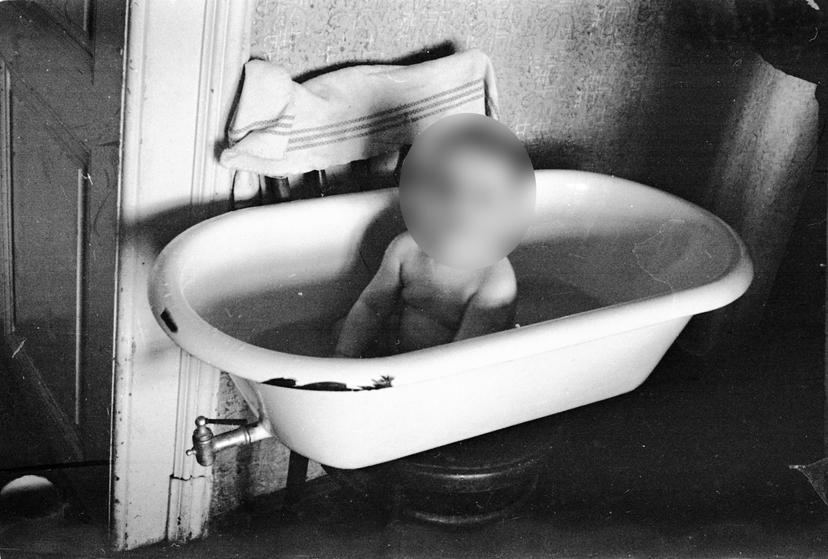
Photo: Fortepan / Morvay Kinga / Wikimedia Commons, face blurred by Circumpedia · CC BY-SA 3.0
Key takeaways
- Don't force it: Forcing the foreskin back can cause pain, tears, bleeding and scarring.2, 4
- Tight is normal: A tight foreskin is normal in babies and young boys.1, 5
- Clean by how it moves: Go by how freely the foreskin moves, not by age alone.4
- Always put it back: After cleaning underneath, pull the foreskin forward again.4
- Know the emergency: A foreskin stuck behind the head of the penis (paraphimosis) is a medical emergency.1, 4
On this page
- At a glance
- How do I clean my baby's penis?
- How do I clean my toddler's penis?
- How should a school-age boy wash?
- What changes for a teenager?
- Should I pull the foreskin back?
- When will the foreskin loosen?
- Will a tight foreskin cause problems later?
- What are the white lumps under the foreskin?
- Is ballooning when he urinates normal?
- What if someone forced the foreskin back?
- How do I teach him to wash?
- What's normal, and when should we see a doctor?
- The foreskin is stuck behind the head and swollen: is it an emergency?
- When to call
At a glance
| Age | How to wash | What's normal | When to see a doctor |
|---|---|---|---|
| Baby | Outside only, warm water4, 5 | Tight, attached foreskin1, 4 | Swelling, redness, pus, trouble urinating1, 4 |
| Toddler | Outside; sources differ on starting gentle partial pulling back (see below)3, 4 | Ballooning when he urinates1, 2 | Sore, red or swollen foreskin1, 4 |
| School-age | Learns to wash himself once it moves3, 4 | Foreskin may still not pull back; white lumps (smegma)1, 2 | Repeated infections, white scarring, pain2 |
| Teen | Washes underneath, then pulls the foreskin forward3, 4 | Pulls back in 99 in 100 boys by 16 (Sheffield Children's)2 | Painful erections; foreskin stuck behind the head1 |
Baby
Toddler
School-age
Teen
How do I clean my baby's penis?
In the first year, clean only the outside.4
- No pulling, no swabs: Don't try to pull the foreskin back or put cotton swabs into the opening.4
- Diapers: Wipe poop away with warm water and a soft cloth, and change diapers often.2, 5
- Water, not soap: On its balanitis page, the UK's NHS advises gently washing a child's penis every day with warm water, drying it gently, and using no soap, bubble bath or baby wipes.5
How do I clean my toddler's penis?
Keep washing the outside with warm water at bath time.2, 5 After 1 to 2 years of age, the foreskin's attachments to the head of the penis start to break down, at different rates in different children.2
Health bodies differ on what to do next:
- Seattle Children's Hospital says to begin gentle partial retraction (pulling back) at 1 to 2 years, only as far as it goes, with no rush, and to clean beneath it about once a week at bath time.4
- The UK's NHS and the Canadian Paediatric Society say not to pull the foreskin back while it's still attached.1, 3, 5 Sheffield Children's NHS Foundation Trust says you don't need to pull it back.2
All warn against forcing it.1–4 Pulling back should never cause pain or crying.4
How should a school-age boy wash?
Some boys can't pull the foreskin back until age 10 or later, and that's normal.1
If the foreskin becomes naturally retractable, gently rinse underneath with water. Once retractable, teach the child to retract, rinse underneath, dry if necessary, and replace the foreskin over the head of the penis as part of regular hygiene.
Once it does pull back, health bodies differ on how often to wash underneath:
- The Canadian Paediatric Society says to teach him to wash underneath it each day once it pulls back fully.3
- Seattle Children's Hospital says to clean beneath it once a week during bathing as the foreskin becomes able to pull back on its own, and to teach a boy to do this himself.4
What changes for a teenager?
Seattle Children's Hospital says the foreskin always pulls back on its own by puberty.4 Sheffield Children's NHS Foundation Trust says 99 in 100 boys can pull it back by 16.2 The Canadian Paediatric Society says full pulling back can come even after puberty.3
Once it moves, the routine is the same: wash underneath, rinse, and pull the foreskin forward.3, 4 Normal erections stretch the foreskin.4 Painful erections are a reason to see a doctor.1
Should I pull the foreskin back?
Never by force. Forcing it can cause pain, tears, bleeding and scarring, or the foreskin can get stuck behind the head of the penis.2, 4 While it's attached, washing the outside with water is enough.2
Health bodies differ on gentle partial pulling back in toddlers: see "How do I clean my toddler's penis?" above.1, 3, 4
When will the foreskin loosen?
It loosens on its own as boys get older, so treatment is often not needed.1 Health bodies give different ages:
- Canadian Paediatric Society: may not pull back fully until 3 to 5 years, or even until after puberty.3
- NHS (UK): most not before 5; some not until 10 or later.1
- Seattle Children's Hospital: it separates gradually over 5 to 10 years from birth, and always by puberty.4
- Sheffield Children's NHS Foundation Trust: most by 10; 99 in 100 by 16.2
If he has a normal urine stream, any amount of foreskin movement is normal.4
Will a tight foreskin cause problems later?
Usually not. Foreskins of babies and young boys usually loosen as they get older, so treatment is often not needed.1 If a tight foreskin causes symptoms, such as pain, swelling or trouble urinating, see a doctor.1 A doctor may suggest a steroid cream first; surgery is usually considered only if that doesn't help.
What are the white lumps under the foreskin?
As the foreskin separates, skin cells are shed and collect under it. This is smegma; the lumps are sometimes called "smegma pearls."2, 3 Smegma is normal and harmless, not a sign of infection.4
Don't force the lumps out.3 If they sit beyond where the foreskin pulls back, leave them until normal separation brings them out. Then wipe them away.3, 4
Is ballooning when he urinates normal?
Yes. The end of the penis may bulge or balloon when he urinates, especially if the foreskin is tight.1 It can look odd, like a balloon filling and emptying, but it's actually helpful.2 Pain or trouble urinating is a reason to see a doctor.1
What if someone forced the foreskin back?
Pain after an attempt to pull it back may mean a small cut or tear.4 If the foreskin won't go back over the head of the penis, it's an emergency (see below).1 Get care now if there's severe pain, a red foreskin with fever, or he looks very sick.4 Contact your doctor within 24 hours if the foreskin is red, swollen or painful, or there's pus.4
How do I teach him to wash?
Go by how freely his foreskin moves, not by his age alone.
- When: At bath or shower time, with warm water.2, 5
- How far: Only as far as it moves on its own. It should never hurt.4
- Underneath: Rinse, wipe away any smegma, and leave no soap there.4 Soap and shower gels may irritate the skin.5
- Every time: Pull the foreskin forward to its normal position, then dry gently.4, 5
What's normal, and when should we see a doctor?
Tightness, ballooning, smegma lumps and stretching with erections are all normal.1, 2, 4 The box below lists signs that need a doctor, and how fast.
The foreskin is stuck behind the head and swollen: is it an emergency?
Yes. A foreskin that is pulled back and can't return over the end of the penis is called paraphimosis.1 It causes severe pain and swelling and is a medical emergency.1, 4 Call your local emergency number or go to the emergency department.1
When to call
Emergency: call your local emergency number or go to the emergency department
Get care now
Contact your doctor within 24 hours
See a doctor (not urgent)
- Swollen, itchy, sore or red head of the penis5
- Bleeding, thick discharge or a bad smell1
- Pain or trouble urinating1
- Painful erections1
- Repeated infections, or white scarring on the foreskin2
- A urine stream that looks abnormal (office hours)4
Normal: keep watching
- Tight foreskin in a baby or young boy1, 5
- Ballooning when he urinates, with a normal stream1, 2, 4
- White smegma lumps2, 4
Related: Circumcision in babies and children · What is circumcision?
Questions to ask your provider
- How should we clean his foreskin at this stage?
- Should we try gentle partial pulling back, or leave it alone?
- Should he wash underneath daily or weekly?
- Does his urine stream look normal?
- If the foreskin is forced back and tears, what do we do at home?
The bottom line
The foreskin loosens on its own over years, and care follows how far it moves. Where the health bodies above disagree, your doctor can say what fits your son.
Sources (5)
- NHS (UK). "Phimosis (tight foreskin)." Last reviewed Mar 6, 2026. https://www.nhs.uk/conditions/phimosis/ (accessed Nov 3, 2026)
- Sheffield Children's NHS Foundation Trust (UK). "Normal penis and foreskin development." Published May 9, 2023; updated Jan 5, 2024. https://library.sheffieldchildrens.nhs.uk/normal-penis-and-foreskin-development/ (accessed Nov 3, 2026)
- Canadian Paediatric Society, Caring for Kids. "Circumcision of baby boys: Information for parents" (care section). Updated Feb 2021. https://caringforkids.cps.ca/handouts/pregnancy-and-babies/circumcision (accessed Nov 3, 2026)
- Seattle Children's Hospital. "Foreskin Care Questions." Reviewed May 5, 2025. https://www.seattlechildrens.org/conditions/a-z/foreskin-care-questions/ (accessed Nov 3, 2026)
- NHS (UK). "Balanitis." Reviewed May 30, 2023. https://www.nhs.uk/conditions/balanitis/ (accessed Nov 3, 2026)
See something wrong? Report an error · How we correct pages · How we make our pages