Is circumcision required for Christians? Bible and churches
 By The Rev'd Dr Ayotunde OyadiranUpdated Nov 4, 2026
Short answer
In the Hebrew Bible, circumcision is established as the sign of God's covenant with Abraham, to be performed on the eighth day of a male child's life.1 According to Luke's Gospel, Jesus was circumcised on the eighth day after his birth.3 At the Council of Jerusalem, the early church determined that circumcision was not to be imposed on Gentile converts as a requirement of Christian faith.4
The Christian traditions discussed in this article do not generally require circumcision as a religious obligation for Christians. However, they differ in how they interpret its significance in the Old and New Testaments, its relationship to baptism, and whether it remains a customary practice within their communities.
Bible quotations are from the New American Bible, Revised Edition.
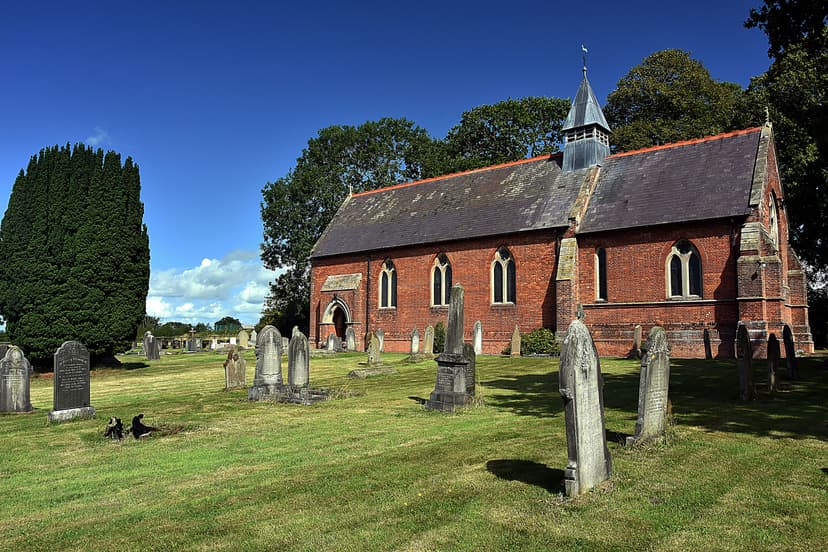
Photo: Gammock / Wikimedia Commons · CC BY-SA 4.0
Key takeaways
- Old Testament: Circumcision was prescribed for males as the covenant sign given to Abraham, with the eighth day specified for newborn boys.1, 2
- Jesus: Luke records that Jesus was circumcised and given his name on the eighth day.3
- Early church: The apostles and elders at Jerusalem did not make circumcision a requirement for Gentile believers.4
- Christian traditions today: Catholic, Eastern Orthodox, and Reformed traditions associate baptism with the fulfilment or replacement of circumcision in different ways. Baptist teaching approaches baptism from the perspective of a believer's personal faith.11, 18–20
On this page
What does the Bible say about circumcision?
Circumcision first appears as a covenantal requirement in Genesis 17. God instructs Abraham that "every male among you shall be circumcised." The practice is designated as "the sign of the covenant between me and you."1
The passage also specifies when the rite is to be performed: "every male among you, when he is eight days old, shall be circumcised." It further states that an uncircumcised male "will be cut off from his people; he has broken my covenant."1
Genesis records that Abraham underwent circumcision at the age of 99, while his son Ishmael was 13. Both were circumcised "on that same day."1 The requirement is subsequently reiterated in Leviticus: "On the eighth day, the flesh of the boy's foreskin shall be circumcised."2
Two additional biblical accounts describe circumcision in distinctive circumstances.
In Exodus, Zipporah, the wife of Moses, circumcises their son using a piece of flint. The accompanying footnote in the United States Conference of Catholic Bishops' Bible acknowledges that the passage has long presented difficulties for biblical commentators.5
In Joshua, the Israelite males who had been born during the wilderness journey are circumcised with flint knives. The location is subsequently named "Hill of the Foreskins," reflecting the event described in the passage.6
What is "circumcision of the heart"?
Circumcision is also used in Scripture as a metaphor for spiritual transformation and a changed relationship with God.
Deuteronomy calls upon the Israelites to undergo an inward transformation, declaring: "Circumcise therefore the foreskins of your hearts, and be stiff-necked no longer."7
Jeremiah similarly urges the people of Judah to "remove the foreskins of your hearts."8
The apostle Paul develops this imagery in his teaching on the relationship between outward observance and inward faithfulness. In Romans, he explains that "circumcision is of the heart, in the spirit, not the letter."9
These passages employ the language of circumcision to describe an inward spiritual reality rather than merely an outward physical practice.
Was Jesus circumcised?
According to Luke's Gospel, Jesus was circumcised in accordance with Jewish law. Luke records: "When eight days were completed for his circumcision, he was named Jesus."3
The same Gospel describes the circumcision and naming of John the Baptist. His relatives "came on the eighth day to circumcise the child," and he received the name John.10
The Catechism of the Catholic Church interprets the circumcision of Jesus within the context of the covenant with Abraham. It states: "Jesus' circumcision, on the eighth day after his birth, is the sign of his incorporation into Abraham's descendants, into the people of the covenant." The Catechism further explains that this sign "prefigures that 'circumcision of Christ' which is Baptism."11
Do Christians have to be circumcised?
The question of circumcision became a significant point of disagreement among the earliest Christians, particularly concerning Gentile converts.
Acts 15 records that some individuals taught Gentile believers: "Unless you are circumcised according to the Mosaic practice, you cannot be saved."4
In response, the apostles and elders assembled in Jerusalem to consider the matter. James proposed "that we ought to stop troubling the Gentiles who turn to God."
The resulting letter to the Gentile believers stated: "It is the decision of the holy Spirit and of us not to place on you any burden beyond these necessities." The requirements listed included abstaining from food sacrificed to idols, blood, the meat of strangled animals, and unlawful marriage.4
The narrative also records that Paul had his co-worker Timothy circumcised. Timothy's mother was Jewish, and Paul undertook the circumcision "on account of the Jews of that region."12
Paul's letters provide several important perspectives on circumcision in the Christian faith:
- Galatians: Paul warns that "if you have yourselves circumcised, Christ will be of no benefit to you." He also declares: "in Christ Jesus, neither circumcision nor uncircumcision counts for anything, but only faith working through love."13
- 1 Corinthians: Paul states: "Circumcision means nothing, and uncircumcision means nothing; what matters is keeping God's commandments."14
- Romans: Paul explains that Abraham "received the sign of circumcision as a seal on the righteousness received through faith while he was uncircumcised."15
- Colossians: Paul describes believers as having been "also circumcised with a circumcision not administered by hand." The following verse connects this imagery with baptism, stating that they were "buried with him in baptism."16
- Philippians: Paul identifies himself as one "circumcised on the eighth day," before declaring: "we are the circumcision, we who worship through the Spirit of God."17
Taken together, these passages illustrate how the New Testament discusses circumcision in relation to the covenant, faith, obedience, and the identity of Christian believers.
Does baptism take the place of circumcision?
Christian traditions interpret the relationship between circumcision and baptism in different ways. Their teachings reflect distinct understandings of the covenant, Christian initiation, and the significance of baptism.
- Baptist (Southern Baptist): The Baptist Faith and Message describes Christian baptism as "the immersion of a believer in water in the name of the Father, the Son, and the Holy Spirit." In his discussion of this article, Brad Waggoner explains that Baptist teaching does not include infant baptism because baptism follows an individual's personal profession of faith.20
- Catholic: The Catechism of the Catholic Church describes baptism as the "circumcision of Christ" prefigured by Jesus' own circumcision. This interpretation connects Christian baptism with the covenantal significance of the Old Testament rite.11
- Eastern Orthodox: The Orthodox Church in America teaches that circumcision was replaced by the Mystery of Baptism, understanding the Christian sacrament within the transition from the Old Covenant to the New Covenant.18
- Reformed: The Heidelberg Catechism, in Question 74, teaches that infants should be baptized "because they, as well as their parents, are included in the covenant and belong to the people of God." It explicitly identifies baptism as taking the place of circumcision.19
These traditions therefore share an interest in the relationship between circumcision and Christian initiation, while differing in their explanations of baptism and its recipients.
Do churches still mark Jesus' circumcision?
Several Christian traditions commemorate the circumcision and naming of Jesus on January 1, eight days after Christmas. The observance of the feast is distinct from requiring Christians to undergo circumcision.
- Catholic (Roman calendar): January 1 was historically observed as the "Circumcision of the Lord." Following the reform of the Roman calendar in 1969, the day became the Solemnity of Mary, Mother of God.21
- Eastern Orthodox: The Orthodox Church in America observes the feast of "The Circumcision of our Lord and Savior Jesus Christ" on January 1.18
- Episcopal (United States): January 1 was traditionally observed as the Feast of the Circumcision. The 1979 Book of Common Prayer adopted the present designation, the Holy Name of Our Lord Jesus Christ.22
- Anglican (Church of England): The 1662 Book of Common Prayer retains January 1 as the "Circumcision of Christ." Its appointed collect refers to Jesus' circumcision and obedience to the law, while praying for the "true circumcision of the Spirit."27 This demonstrates how the historic Anglican liturgy connects the commemoration with inward spiritual transformation.
- Lutheran: The Lutheran Church—Missouri Synod observes January 1 as the "Circumcision and Name of Jesus."28
- Ethiopian Orthodox Tewahedo: The Ethiopian Orthodox Tewahedo Church's published teaching says that in the New Testament circumcision was replaced by baptism.29
What do the churches teach about circumcision today?
Christian traditions differ in their treatment of circumcision as a religious rite, a cultural custom, and a practice associated with particular communities.
- Catholic: In 1442, the Council of Florence issued the decree of union with the Copts, which included a directive for Christians "to cease entirely from circumcision."23, 24 The interpretation and application of this decree have been discussed by Catholic writers. Jeff Mirus argues that the decree addresses circumcision as an Old Covenant religious practice rather than a medical procedure. He therefore rejects interpretations that would classify modern hospital circumcision as sinful.24
- Coptic Orthodox: According to a historical account by Dioscoros Boles published in the British Orthodox Church's Glastonbury Review, circumcision became established as a custom in Coptic society during the Middle Ages. The account attributes to Patriarch Cyril II a restriction permitting circumcision only before baptism, stating: "No one should circumcise his son after baptism."25
- Eastern Orthodox: The Orthodox Church in America describes circumcision as "a critical element of the Old Covenent [sic], but not of the New Covenant." It also states that the Church does not object to circumcision when undertaken for medical or hygienic purposes.26
- Ethiopian Orthodox Tewahedo: Published Ethiopian Orthodox teaching presents circumcision as a longstanding religious custom connected with the covenant given to Abraham. At the same time, the Church's published teaching identifies baptism as the Christian sacrament that replaces circumcision.29
- Christian communities in sub-Saharan Africa: A 2007 UNAIDS feature story on circumcision and culture reports differing views among Christian communities in the region. It says some churches in South Africa oppose circumcision, viewing it as a pagan ritual, while the Nomiya church in Kenya requires it for membership. It also reports focus groups in Zambia and Malawi in which participants said Christians should be circumcised because Jesus was. The feature reports no clear consensus on whether circumcision is compatible with Christian belief.30
The bottom line
The Bible presents circumcision as the covenant sign given to Abraham, and Luke records that Jesus was circumcised on the eighth day after his birth. The Council of Jerusalem did not impose circumcision on Gentile converts, and mainstream Christian teaching does not generally require it as a condition of salvation.
Christian traditions continue to interpret circumcision in different ways. Some understand baptism as the fulfilment or replacement of the Old Testament rite, while others distinguish between circumcision as a religious requirement and its continued presence as a cultural custom. The observance of Jesus' circumcision in several church calendars likewise reflects its significance in the Christian understanding of his life and obedience to the law.
Sources (30)
- Genesis 17:9–14, 23–27, NABRE, USCCB. https://bible.usccb.org/bible/genesis/17
- Leviticus 12:3. https://bible.usccb.org/bible/leviticus/12
- Luke 2:21. https://bible.usccb.org/bible/luke/2
- Acts 15:1–29. https://bible.usccb.org/bible/acts/15
- Exodus 4:24–26 and footnote. https://bible.usccb.org/bible/exodus/4
- Joshua 5:2–9 and footnotes. https://bible.usccb.org/bible/joshua/5
- Deuteronomy 10:16. https://bible.usccb.org/bible/deuteronomy/10
- Jeremiah 4:4. https://bible.usccb.org/bible/jeremiah/4
- Romans 2:25–29. https://bible.usccb.org/bible/romans/2
- Luke 1:59–60. https://bible.usccb.org/bible/luke/1
- Catechism of the Catholic Church, 527 (Holy See). https://www.vatican.va/special/rosary/documents/popup/popup04_gau_en.html ; https://www.vatican.va/archive/ENG0015/3/NT.HTM
- Acts 16:1–3. https://bible.usccb.org/bible/acts/16
- Galatians 5:2–6 and 6:15. https://bible.usccb.org/bible/galatians/5 ; https://bible.usccb.org/bible/galatians/6
- 1 Corinthians 7:18–19. https://bible.usccb.org/bible/1corinthians/7
- Romans 4:9–11. https://bible.usccb.org/bible/romans/4
- Colossians 2:11–12. https://bible.usccb.org/bible/colossians/2
- Philippians 3:2–5. https://bible.usccb.org/bible/philippians/3
- Orthodox Church in America, "The Circumcision of our Lord and Savior Jesus Christ," January 1. https://www.oca.org/saints/all-lives/2027/01/01
- Heidelberg Catechism, Lord's Day 27, Q&A 74 (creeds.net translation). https://www.creeds.net/Heidelberg/hdlb27.htm
- Waggoner, B., "Baptist Faith and Message, Article 7a: Baptism," Baptist Press. https://www.baptistpress.com/resource-library/news/baptist-faith-and-message-article-7a-baptism/
- Grondelski, J., "Why the Church begins the year celebrating Mary, the Mother of God," EWTN News, January 1, 2025. https://www.ewtnnews.com/world/us/why-the-church-begins-the-year-celebrating-mary-the-mother-of-god-theotokos
- The Episcopal Church, "Holy Name of Our Lord Jesus Christ, The," An Episcopal Dictionary of the Church. https://www.episcopalchurch.org/?p=170238
- Eugene IV, bull "Cantate Domino," February 4, 1442 (Latin), vatican.va. https://www.vatican.va/content/eugenius-iv/la/documents/bulla-cantate-domino-4-febr-1442.html
- Mirus, J., "Against Circumcision: A Classic Out-of-Context Danger," CatholicCulture.org, February 27, 2014. https://www.catholicculture.org/commentary/against-circumcision-classic-out-context-danger/
- Boles, D., "Circumcision and the Copts," Glastonbury Review 122, The British Orthodox Church. https://britishorthodox.org/glastonburyreview/issue-122-circumcision-and-the-copts/
- Orthodox Church in America, Q&A, "What is the Orthodox attitude toward circumcision?" https://oca.org/questions/teaching/circumcision
- Church of England, "The Circumcision of Christ," Book of Common Prayer: Collects, Epistles and Gospels. https://www.churchofengland.org/liturgy/book-of-common-prayer/collects-epistles-and-gospels/circumcision-christ
- The Lutheran Church—Missouri Synod, worship document listing "Circumcision and Name of Jesus (Jan. 1)." https://files.lcms.org/api/file/preview/F88ABDF5-03CC-45EF-97BE-46D961FD3AAB
- Ethiopian Orthodox Tewahedo Church, "Beliefs and Teachings of Ethiopian Orthodox Tewahedo Church: Five Pillars of Mystery," section C, "Mystery of Baptism." https://www.eotc-ma.com/beliefs-and-origins-five-pillars-of
- UNAIDS, feature story, "Male Circumcision: Context, Criteria and Culture (Part 1)," February 26, 2007. https://www.unaids.org/en/resources/presscentre/featurestories/2007/february/20070226mcpt1
See something wrong? Report an error · How we correct pages · How we make our pages